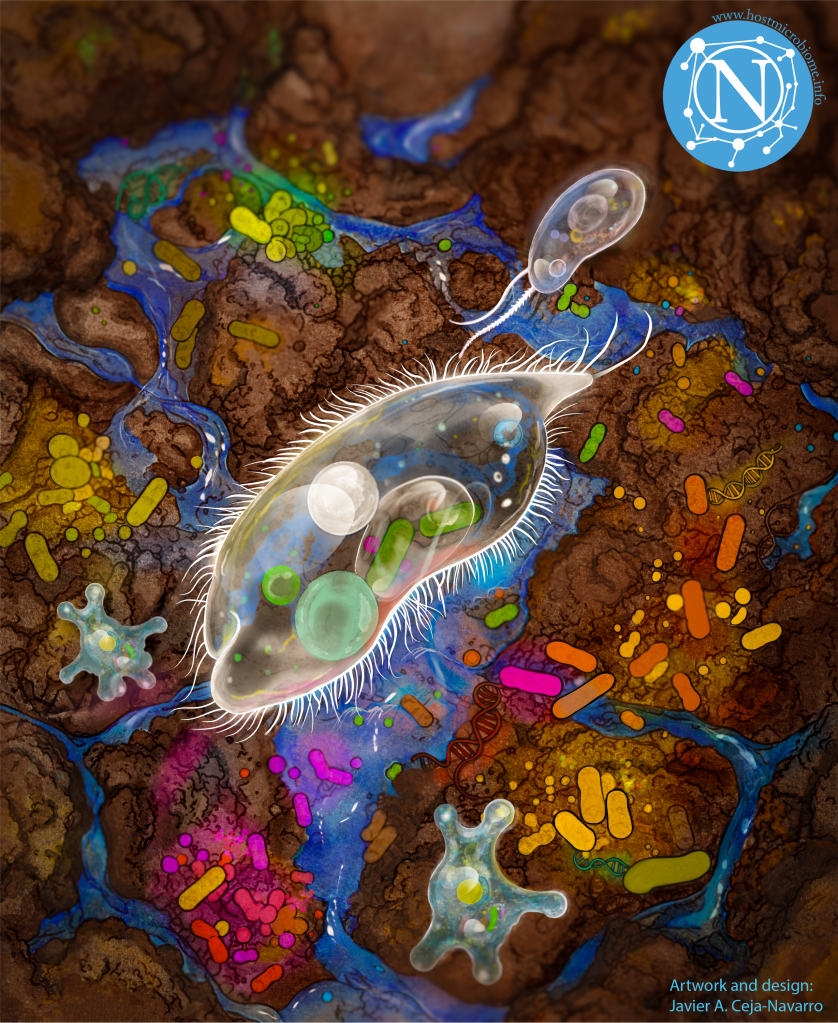
Paper alert! The Tiny Predators That Help Shape the Soil Beneath Our Feet

Ciliates, flagellates and amoeba interact with bacteria in soil

When we think about predators, we often imagine wolves, lions, or sharks. But some of the most influential predators on Earth are invisible to the naked eye.

A single teaspoon of healthy soil contains billions of microorganisms. These bacteria and fungi recycle nutrients, help plants grow, store carbon, and support nearly every terrestrial ecosystem. Living alongside them are microscopic predators called protists. Many protists are single-celled organisms that hunt bacteria in much the same way a lion hunts its prey. Despite their abundance, we still know surprisingly little about how these tiny predators influence the hidden world beneath our feet.

Our newly published study in Environmental Science & Technology, led by postdoctoral researcher Dishant Patel, explored what happens when protists become active in soil. See: https://pubs.acs.org/doi/10.1021/acs.est.5c18948

To answer this question, we recreated a simple version of a natural event in the laboratory. Dry soil was rewetted, similar to what happens after a rainfall, and we introduced naturally occurring protist predators. We then observed how the soil microbial community responded over just three days.

The results surprised us. Within this short period, protist feeding rapidly altered microbial activity. Genes involved in nitrogen and phosphorus cycling became more active, suggesting that microbial predators can quickly influence the processes responsible for releasing nutrients that plants depend on. At the same time, bacteria activated genes associated with movement, stress responses, and other traits that help them survive in the presence of predators.

These findings suggest that predation is more than simply one organism consuming another. Predator-prey interactions can rapidly reorganize how entire microbial communities function.

Why does this matter?

After a rainfall, dry soils often experience a burst of biological activity. Microbes begin growing again, nutrients become available, and carbon dioxide is released into the atmosphere. Most research has focused on how water stimulates microbial growth. Our study suggests there is another important piece of the puzzle: as water reconnects microscopic habitats within the soil, protists gain access to bacterial prey, triggering ecological interactions that unfold within hours to days.

In other words, rainfall may not only wake up microbes. It may also wake up the predators that help regulate them.

Understanding these interactions is becoming increasingly important as climate change alters rainfall patterns around the world. Longer droughts followed by intense rain events are expected to become more common in many regions. Knowing how microbial food webs respond to these changes could improve our understanding of nutrient cycling, soil health, and ecosystem resilience.

Perhaps the most exciting message from this work is that the smallest organisms can have some of the largest impacts. Every handful of soil contains an active food web, where microscopic predators are constantly shaping the behavior of microbial communities that support life on Earth.

The next time you smell the fresh scent of soil after a rainstorm, remember that an invisible drama is unfolding beneath your feet. Billions of microbes are becoming active, microscopic predators are beginning their hunt, and together they are helping determine how ecosystems function.
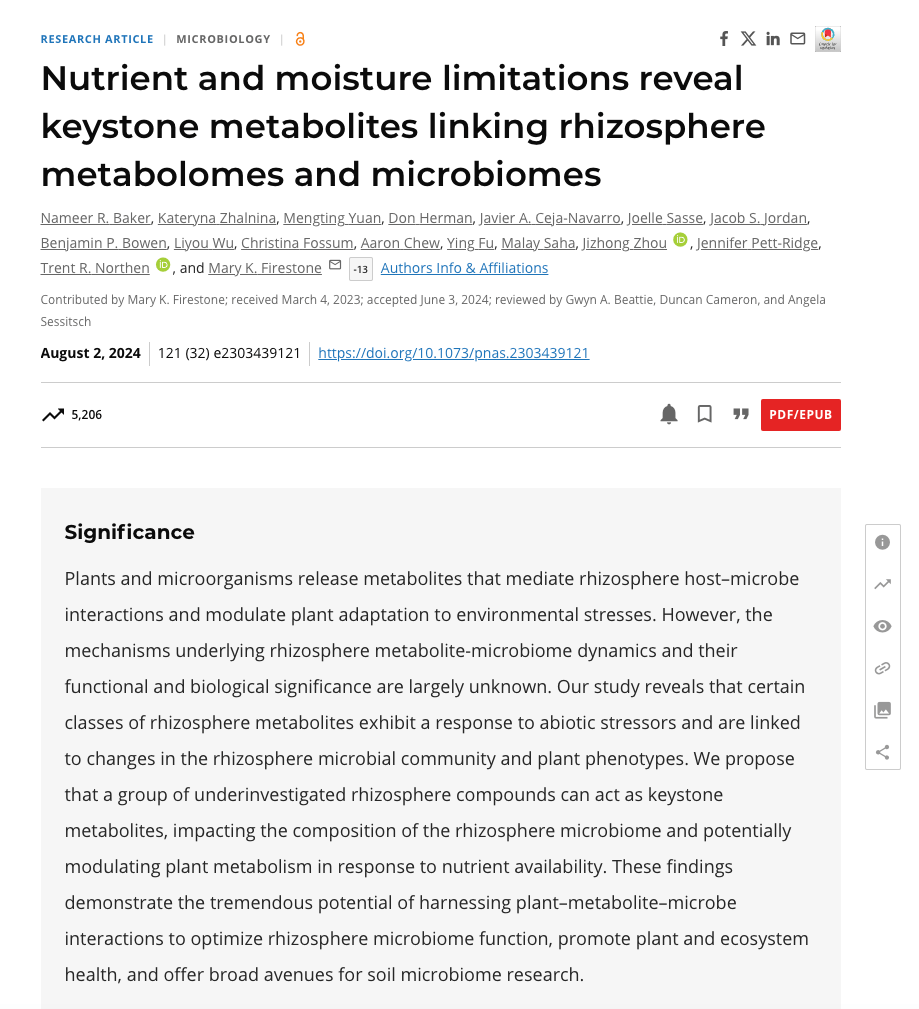

Paper alert! Nutrient and moisture limitations reveal keystone metabolites linking rhizosphere metabolomes and microbiomes

Plants release a wealth of metabolites into the rhizosphere that can shape the composition and activity of microbial communities in response to environmental stress. The connection between rhizodeposition and rhizosphere microbiome succession has been suggested, particularly under environmental stress conditions, yet definitive evidence is scarce.

In this study, the authors investigated the relationship between rhizosphere chemistry, microbiome dynamics, and abiotic stress in the bioenergy crop switchgrass grown in a marginal soil under nutrient-limited, moisture-limited, and nitrogen (N)-replete, phosphorus (P)-replete, and NP-replete conditions.

Treatments with contrasting N availability differed greatly in the abundance of potential keystone metabolites; serotonin and ectoine were particularly abundant in N-replete soils, while chlorogenic, cinnamic, and glucuronic acids were enriched in N-limited soils. Serotonin, the keystone metabolite we identified with the largest number of links to microbial taxa, significantly affected root architecture and growth of rhizosphere microorganisms, highlighting its potential to shape microbial community and mediate rhizosphere plant–microbe interactions.

Read the study here: https://www.pnas.org/doi/10.1073/pnas.2303439121

New collaborative publication analyzing the toxicity of fluorine-free firefighting foams using a soil nematode as a model system

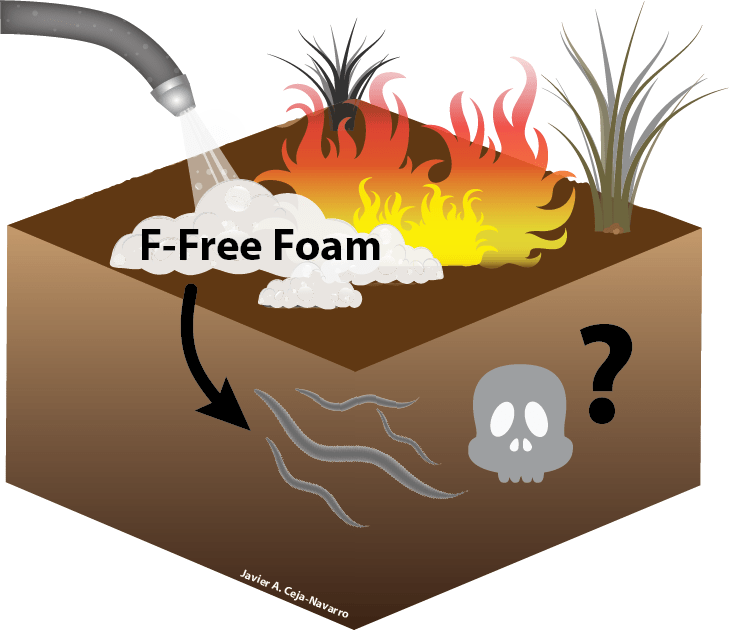
In this study, we used the model organism Caenorhabditis elegans to evaluate the sublethal toxicity of six F-free AFFF alternatives and a current short-chain AFFF in soil invertebrates. We developed a rapid counting and measuring method for assessing sublethal toxicity in C. elegans. Our group took over the establishment of assays following ISO protocols, the maintenance of the nematodes, and the optimization of the approaches for the extractions of living worms from the soil matrix. The results presented in this publication showed that all tested formulations showed adverse impacts on the growth of C. elegans at concentrations lower than or close to the practical application concentration in the field. Also, five of six F-free alternatives caused reduced reproduction in C. elegans. Formulations containing higher concentrations of hydrocarbon surfactants were more toxic than other formulations to C. elegans. This study provides ecotoxicological data that, combined with data from all related ongoing research, should be used in decision-making regarding recommendations for manufacturing and use of candidate F-free foams.

Tested F-free formulations showed adverse effects on the soil nematode C. elegans. Illustration by Javier A. Ceja-Navarro

Javier’s work is featured at the Tech Interactive Museum

Javier’s work is featured at the Tech Interactive Museum (https://www.thetech.org/) as part of Solve for the Earth exhibition (https://www.solveforearth.com/). In a set of three videos, Javier describes his path through science, work, and discoveries. The videos were recorded in Spanish with English subtitles to highlight Javier’s commitment to the Latinx community.

Protists community dynamics in the rhizosphere of switchgrass – a video presentation

This video was originally prepared for a conference presentation, but the work that Petr Kosina and I put in the making of little piece made me want to share it more broadly. So here it is, a video in which I describe the concepts and findings of our paper published in the Microbiome Journal.

Protists communities are dynamic and more complex in the rhizosphere

Our new study on the succession of protists in the rhizosphere of switchgrass is now published. This work is part of a multi-institutional collaboration in which my team was in charge of studying soil microfauna – protists, which are microbes too!

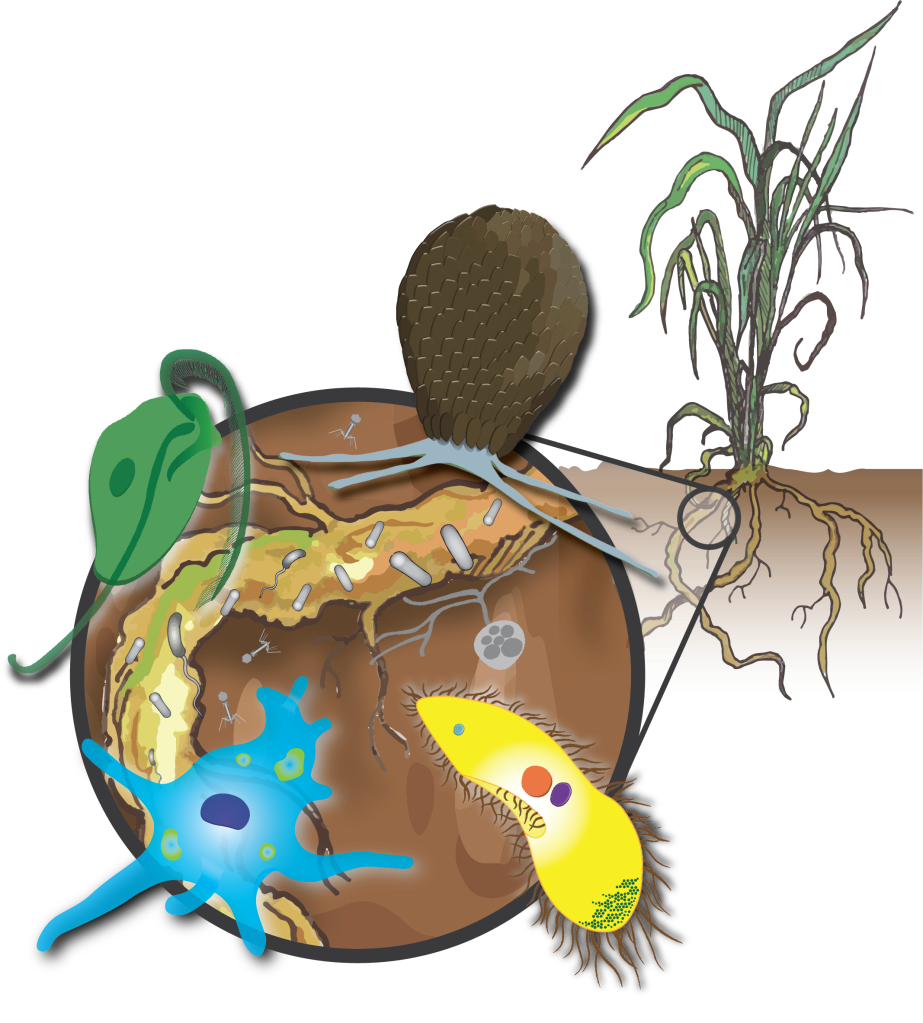
The study shows that protists’ community diversity and composition change as the switchgrass plants go through different phenological stages, from early vegetative growth to senescence. The plants were grown in two marginal soil sites managed by the Noble Research Institute. Hence, the study is the result of a field experiment beautifully managed by the Noble scientists. Part of the analysis of protist community dynamics included the reconstruction of co-occurrence networks whose similarity thresholds were not arbitrary by calculated using Random Matrix Theory-based approaches. The results of these analyses show that the networks of protists in the rhizosphere are more complex and dynamic than those of the bulk soil, which remain unchanged from beginning to end of the study (for the most part). We also used iCAMP to analyze the mechanisms that control protist community assembly. We show that dispersal limitation is the mechanism controlling protist assembly in the bulk soil, while homogeneous selection is the mechanism that regulates the assembly of protists in the rhizosphere.

Protists are a type of microbe, and are slowly being recognized as key elements of the soil and rhizosphere microbiome. In this study, protist communities near plant roots were found to respond to the different developmental stages of switchgrass. (Credit: Javier A. Ceja Navarro)

Javier participated in the “Dia de la Ciencia” with the Mexican General Consulate in San Francisco

Javier hosted the forum “Carreras en Ciencia” organized by Science at Cal and the Mexican General Consulate in San Francisco. For the event, six young Latino scientists shared their experiences from their childhood curiosity to becoming scientists.

The event was accompanied by a Q&A section in which the scientists interacted with the public. To see a recording of this event go to: