When we think about predators, we often imagine wolves, lions, or sharks. But some of the most influential predators on Earth are invisible to the naked eye.
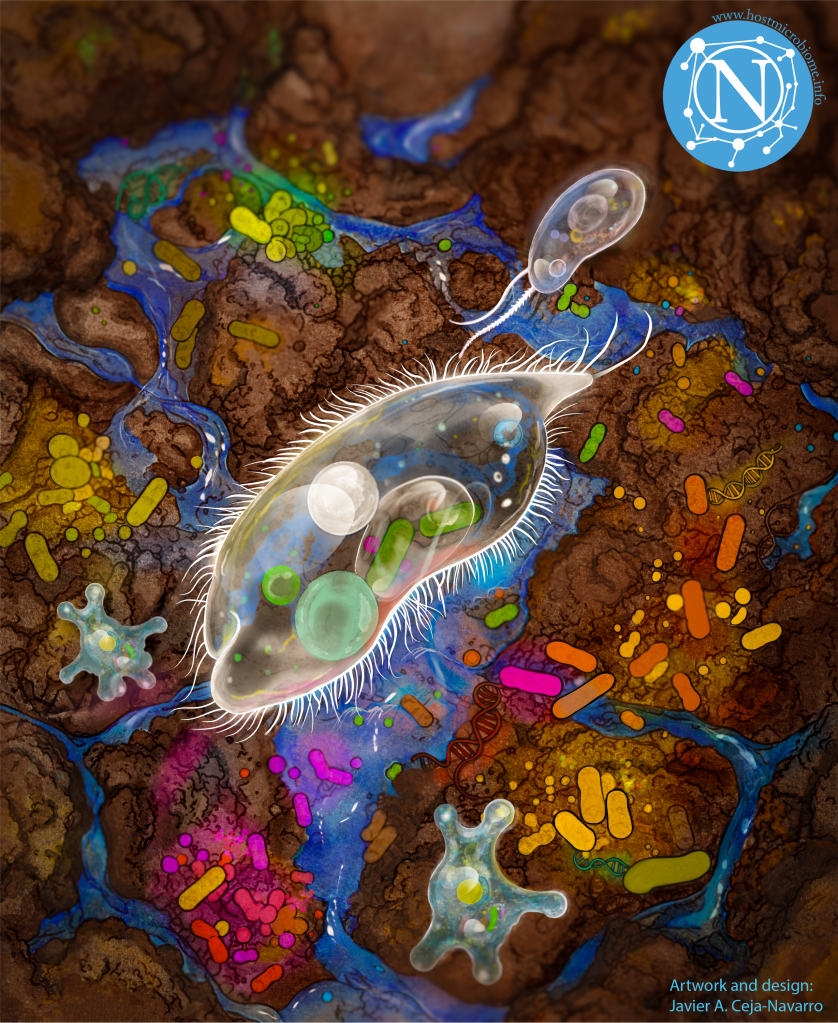
A single teaspoon of healthy soil contains billions of microorganisms. These bacteria and fungi recycle nutrients, help plants grow, store carbon, and support nearly every terrestrial ecosystem. Living alongside them are microscopic predators called protists. Many protists are single-celled organisms that hunt bacteria in much the same way a lion hunts its prey. Despite their abundance, we still know surprisingly little about how these tiny predators influence the hidden world beneath our feet.
Our newly published study in Environmental Science & Technology, led by postdoctoral researcher Dishant Patel, explored what happens when protists become active in soil. See: https://pubs.acs.org/doi/10.1021/acs.est.5c18948
To answer this question, we recreated a simple version of a natural event in the laboratory. Dry soil was rewetted, similar to what happens after a rainfall, and we introduced naturally occurring protist predators. We then observed how the soil microbial community responded over just three days.
The results surprised us. Within this short period, protist feeding rapidly altered microbial activity. Genes involved in nitrogen and phosphorus cycling became more active, suggesting that microbial predators can quickly influence the processes responsible for releasing nutrients that plants depend on. At the same time, bacteria activated genes associated with movement, stress responses, and other traits that help them survive in the presence of predators.
These findings suggest that predation is more than simply one organism consuming another. Predator-prey interactions can rapidly reorganize how entire microbial communities function.
Why does this matter?
After a rainfall, dry soils often experience a burst of biological activity. Microbes begin growing again, nutrients become available, and carbon dioxide is released into the atmosphere. Most research has focused on how water stimulates microbial growth. Our study suggests there is another important piece of the puzzle: as water reconnects microscopic habitats within the soil, protists gain access to bacterial prey, triggering ecological interactions that unfold within hours to days.
In other words, rainfall may not only wake up microbes. It may also wake up the predators that help regulate them.
Understanding these interactions is becoming increasingly important as climate change alters rainfall patterns around the world. Longer droughts followed by intense rain events are expected to become more common in many regions. Knowing how microbial food webs respond to these changes could improve our understanding of nutrient cycling, soil health, and ecosystem resilience.
Perhaps the most exciting message from this work is that the smallest organisms can have some of the largest impacts. Every handful of soil contains an active food web, where microscopic predators are constantly shaping the behavior of microbial communities that support life on Earth.
The next time you smell the fresh scent of soil after a rainstorm, remember that an invisible drama is unfolding beneath your feet. Billions of microbes are becoming active, microscopic predators are beginning their hunt, and together they are helping determine how ecosystems function.

